Ortiz_passion for dancing
Rhovel Martin F. Ortiz

Dance floors tend to be sweaty places for a reason. All of those shimmies and shakes burn energy like you wouldn’t believe—and come with many other surprising health benefits, too.
When you cut a rug, you can expend more than 300 calories every half-hour, according to a report from the University of Brighton in the UK. That meets or exceeds the amount of energy you burn during an easy run or swim, the report shows. Even relatively tame forms of dance burn about the same number of calories as cycling.
Dancing demands a lot of energy output because it involves “movement in all directions,” says Nick Smeeton, a principal lecturer at the University of Brighton and coauthor of that report. While running, swimming and other propulsive forms of physical activity use rhythm and momentum to keep you moving, “there is a lot of accelerating and decelerating in dancing, which the body is less able to do in an energy efficient way,” Smeeton says.
If running is like driving on a freeway, dancing is more like motoring through a busy city, he says. All of that starting, stopping and changing directions burns a ton of fuel even though you’re not covering a lot of ground.
http://time.com/4828793/dancing-dance-aerobic-exercise/
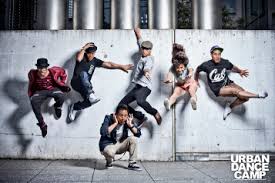
Let's all practice dance floor etiquette! Many dancers and many styles of dancing can be accommodated on the floor at the same time. This means that we have to follow traditional dance floor etiquette. Let's always be courteous and we will all have a great time dancing!
Dances that move in a continuous forward movement should be danced in the outer lanes (counter clockwise which is also the line of dance). There are two lanes depending on the forward movement of the dancers: the outside (fast) lane and the inside (slow) lane. Progressive dances which are danced in the two outer lanes are Waltz, Fox-trot, Tango, Viennese Waltz, and the Two-Step. These dancers generally have the right of way, but should not cut through the floor center!
The floor center is where line dances, spot dances, and "position" dances are held such as the Jive, West Coast Swing, Slow Dancing, and Cha Cha. Do not dance in the outside lanes unless everyone else is doing them at the same time!
If we all follow the golden rules of dance floor etiquette, then all can enjoy dancing to the fullest.
http://www.centralhome.com/ballroomcountry/dance_floor_etiquette.htm

Dance floors tend to be sweaty places for a reason. All of those shimmies and shakes burn energy like you wouldn’t believe—and come with many other surprising health benefits, too.
When you cut a rug, you can expend more than 300 calories every half-hour, according to a report from the University of Brighton in the UK. That meets or exceeds the amount of energy you burn during an easy run or swim, the report shows. Even relatively tame forms of dance burn about the same number of calories as cycling.
Dancing demands a lot of energy output because it involves “movement in all directions,” says Nick Smeeton, a principal lecturer at the University of Brighton and coauthor of that report. While running, swimming and other propulsive forms of physical activity use rhythm and momentum to keep you moving, “there is a lot of accelerating and decelerating in dancing, which the body is less able to do in an energy efficient way,” Smeeton says.
If running is like driving on a freeway, dancing is more like motoring through a busy city, he says. All of that starting, stopping and changing directions burns a ton of fuel even though you’re not covering a lot of ground.
http://time.com/4828793/dancing-dance-aerobic-exercise/
Let's all practice dance floor etiquette! Many dancers and many styles of dancing can be accommodated on the floor at the same time. This means that we have to follow traditional dance floor etiquette. Let's always be courteous and we will all have a great time dancing!
Dances that move in a continuous forward movement should be danced in the outer lanes (counter clockwise which is also the line of dance). There are two lanes depending on the forward movement of the dancers: the outside (fast) lane and the inside (slow) lane. Progressive dances which are danced in the two outer lanes are Waltz, Fox-trot, Tango, Viennese Waltz, and the Two-Step. These dancers generally have the right of way, but should not cut through the floor center!
The floor center is where line dances, spot dances, and "position" dances are held such as the Jive, West Coast Swing, Slow Dancing, and Cha Cha. Do not dance in the outside lanes unless everyone else is doing them at the same time!
If we all follow the golden rules of dance floor etiquette, then all can enjoy dancing to the fullest.
http://www.centralhome.com/ballroomcountry/dance_floor_etiquette.htm
Mga Komento
Mag-post ng isang Komento